
Paint Correction
What Is Paint Correction
The difference between paint that is clean and paint that is actually clear.
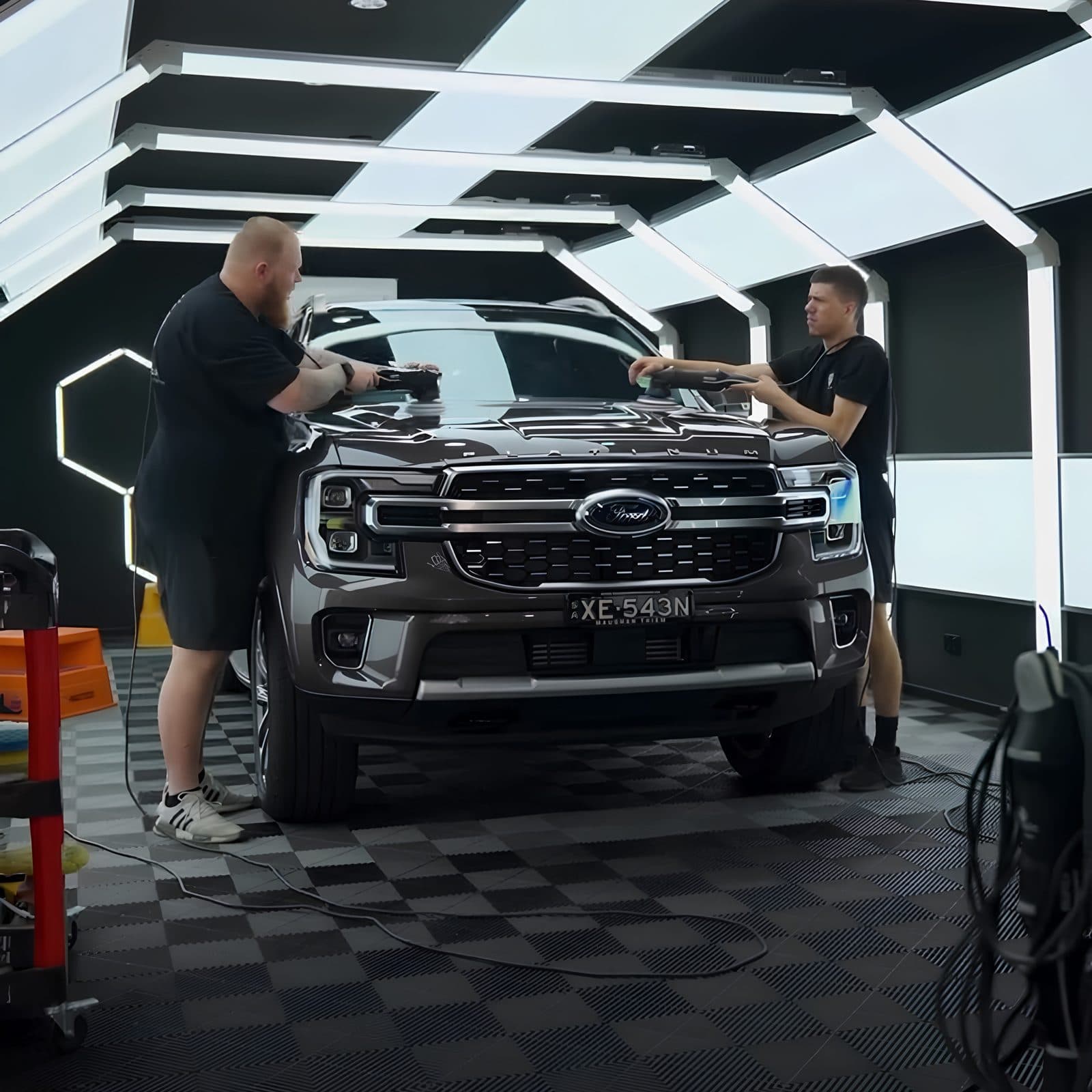
Paint correction is controlled machine polishing that removes a very small amount of clear coat in order to take defects out of it. Not to fill them, not to hide them, to remove them.
It is the difference between a car that is clean and a car whose reflections are sharp. Most paint that looks tired is not worn out, it is scratched, and scratched paint scatters light in every direction instead of reflecting it back.
What Correction Can Improve
- Swirl marks from washing, which is the most common defect on any car
- Fine scratches sitting within the clear coat
- Buffer trails and holograms from previous poor machine work
- Light water spotting and chemical etching
- Oxidation and general dullness on paint that is still sound
What It Cannot Fix
- Scratches deep enough to catch a fingernail, which have gone through the clear
- Stone chips, which are missing paint rather than damaged paint
- Dents and panel damage
- Clear coat that has already begun to fail, flake or go chalky
How the Process Works
Clean and Decontaminate
Wash, decontamination wash, then clay and chemical decontamination. Machine polishing a contaminated panel drags grit under the pad, which puts new defects in while removing old ones.
Inspect Under Light
The finish is read under the studio light rig to see what is actually there. Swirls, scratches, previous repairs and how the paint is behaving all get established before a pad and compound combination is chosen.
Test a Section
A small area is corrected first to see how this particular paint responds. Two cars of the same model and year can behave completely differently, so this is where the plan for the rest of the car is set.
Correct Panel by Panel
Cutting stages take the defects back, refining stages remove the haze the cutting leaves. Skipping the refining stage is what leaves a car looking bright in the shade and hazy in the sun.
Protect the Result
Correction removes clear coat, which means it is not something to repeat casually. Most cars are corrected once and then protected with a ceramic coating so the finish is held rather than lost again.
One Stage or Multiple Stages
The number of stages is decided by the paint, not by a package name. Correction at Detail 2 Drive is quoted after the car has been inspected, and you are told what its finish can realistically be brought back to before any work starts.
Does a New Car Need It
Often, yes. Transport marks, delivery handling and dealer wash swirls are common on cars with almost no kilometres on them, and a dark colour under a light rig shows every one.
Is It Permanent
The defects that are removed are gone. New ones can be put in by poor washing, which is why aftercare matters and why a coating afterwards makes such a difference to how long the result lasts.
Clear coat is finite. A car can only be corrected so many times in its life, which is why the honest answer is sometimes to take less off and accept a very good finish rather than chase a perfect one.
Does Your Car Need It
Park it in direct sun and look along the bonnet at an angle. If you see fine circular scratches everywhere, that is swirl marks, and correction is the only thing that removes them. Read more about paint correction in Pakenham or send through some photos.
Keep Reading
Related Articles
Paint Correction
Why Does Your Car's Paint Look Dull
The car is clean and it still looks flat. There are six likely reasons, and they need different fixes.
ReadPaint Correction
What Causes Swirl Marks on Car Paint
Almost every swirl mark on your car was put there by someone cleaning it.
ReadPaint Correction
Can Correction Remove Scratches
Some scratches come out completely. Some improve. Some should be left alone, and there is a simple test.
Read