Skip to content

Up To $500 Credit

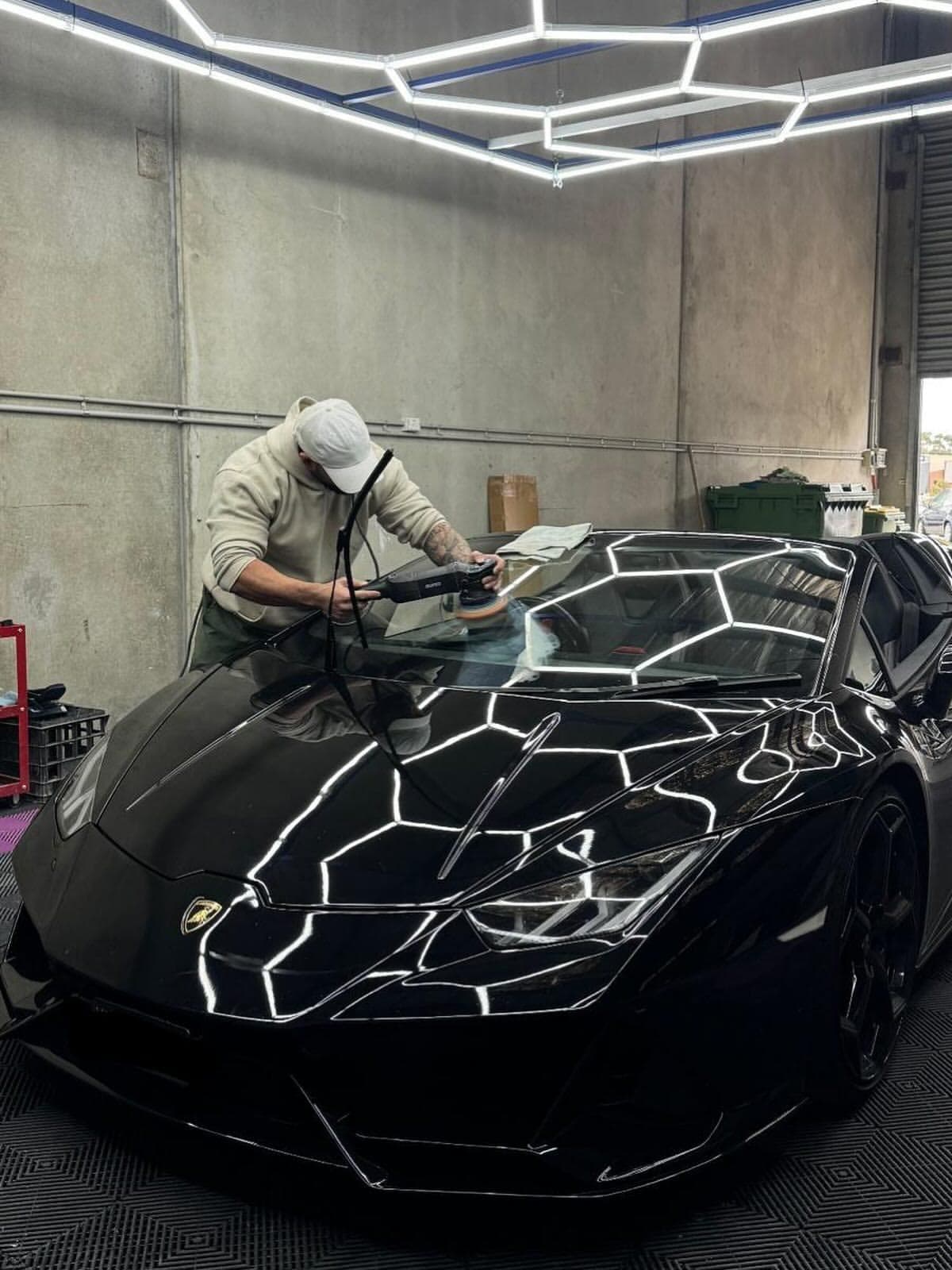
Jesse machine polishing the bonnet of a black Lamborghini Huracan at Detail 2 Drive

For Detailers ยท Trade Training

Learn It Properly

Jesse has spent over ten years working out what actually matters and what is noise. Spend a day on the floor of a working studio and skip the part where you find out the expensive way.

One On One / In The Studio / On Real Cars

Why Train Here

Most Detailers Are Self Taught, And It Shows In The Same Three Places

Almost everyone in this trade learned off videos. That gets you a long way, and then it stops. You end up strong at the stages you happened to watch and guessing at the ones you did not, which is why so many detailers can wash a car beautifully and still have no idea what their machine is doing to the clear coat.

The gaps are predictable. Reading paint under light. Knowing when to stop cutting. Quoting a job properly instead of pricing off what the bloke down the road charges. None of those are complicated, and none of them are learnable by watching someone else do them.

Jesse trains the way he was taught, which is with your hands on the machine and someone standing next to you telling you what you are doing wrong while you are doing it.

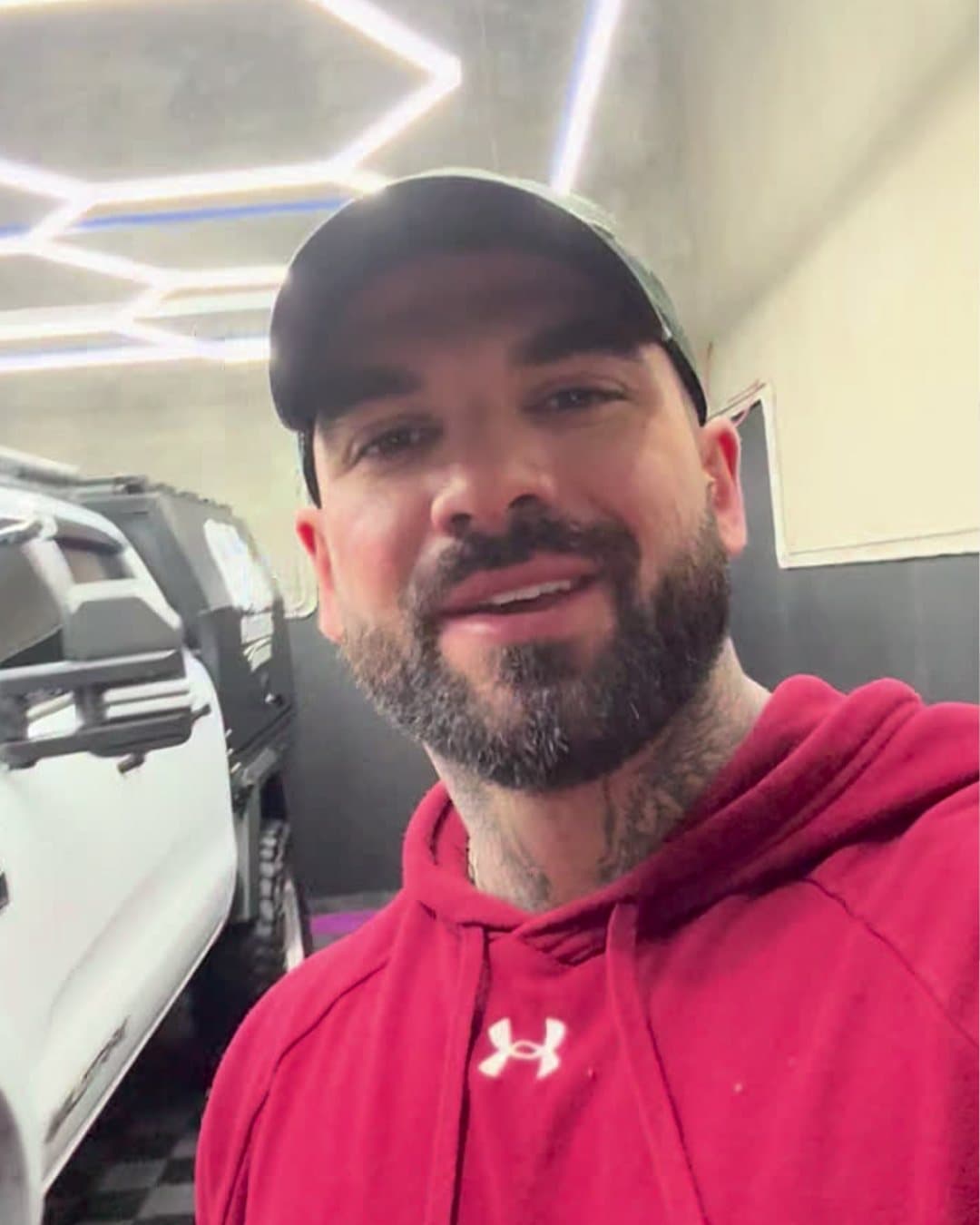
Jesse, owner of Detail 2 Drive, inside the Pakenham detailing studio
  • One On One, Not A Classroom

    Training runs with Jesse and you, or a very small group. Nobody learns machine control watching someone else hold the polisher.

  • In The Studio, On Real Cars

    The same climate controlled studio on Hogan Court, the same light rig, and real customer cars rather than a scrap panel on a bench.

  • Shaped Around What You Already Know

    The day starts by finding out what you can already do. There is no point running you through a wash stage you have done ten thousand times.

  • You Do The Work

    You will be on the machine, on the glass, and on the film. Watching a demonstration is useful for about twenty minutes and then you need to be holding it yourself.

6 Modules

What You Can Learn

Run one on its own or stack several across consecutive days. They are ordered the way the skills actually build, so starting halfway up is usually a false economy.

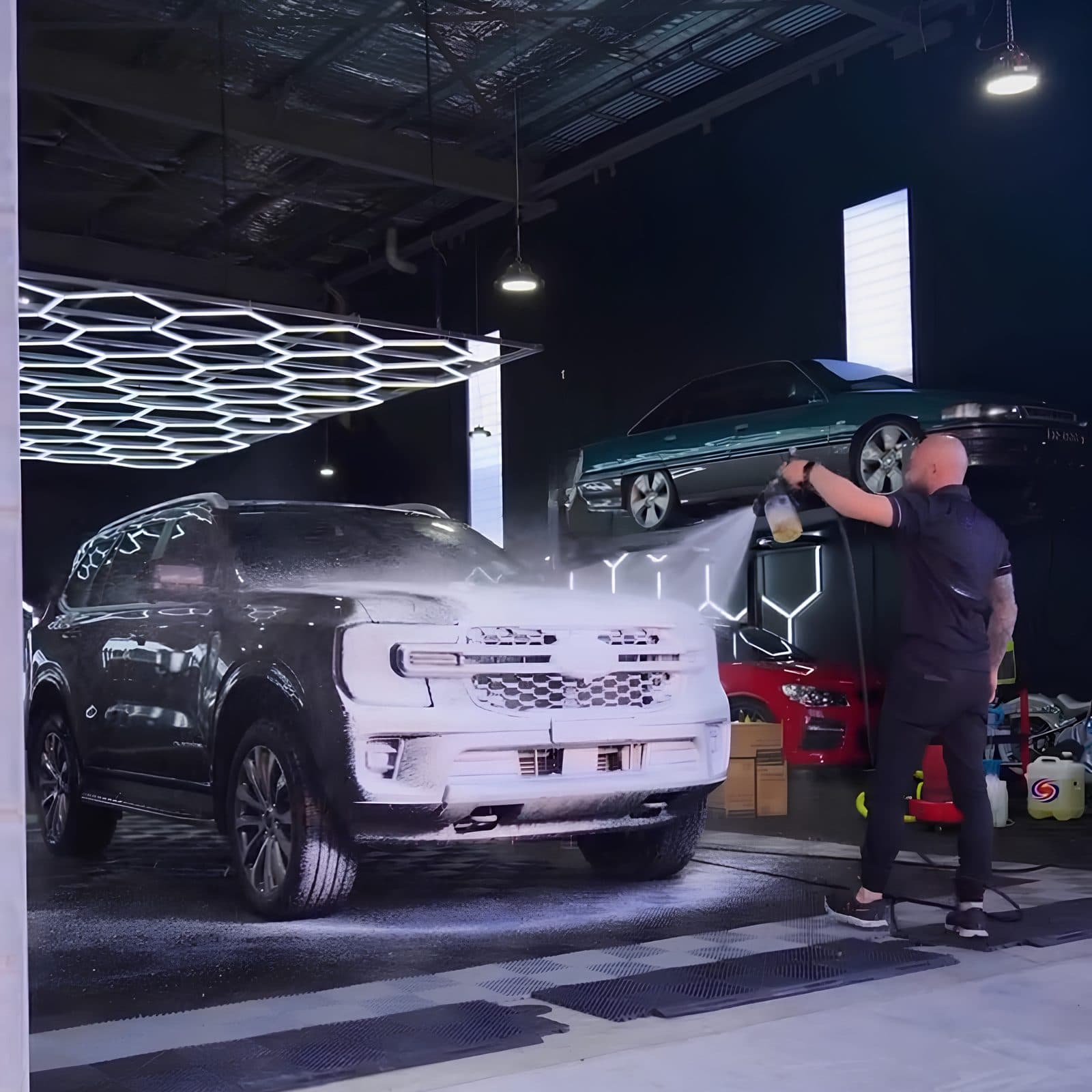
Four wheel drive covered in snow foam during the pre wash stage inside the studio
01

Detailing Fundamentals

One day

The whole run, start to finish, in the order it has to happen. Most self taught detailers are strong in two or three stages and guessing at the rest, and it is the gaps that cost them time on every car.

  • Why wheels and arches come first, and what it costs you when they do not
  • Pre wash, contact wash and safe wash technique that does not install swirls
  • Clay and chemical decontamination, and how to tell which one a car needs
  • Drying without putting marks back into the paint you just cleaned
  • Interior sequence, and the parts of a cabin that get skipped
  • Reading a finished car under light instead of hoping it is right

Suited to Anyone starting out, or a detailer who learned off videos and wants the gaps filled in properly.
Jesse machine polishing the bonnet of a black Lamborghini Huracan at Detail 2 Drive
02

Machine Paint Correction

One to two days

The skill that separates a detailer from a car washer, and the one that takes the longest to get right. You will spend the day on a machine, on real paint, with Jesse watching what your hands are doing.

  • Inspection light, and learning to actually see what is in the paint
  • Paint depth, clear coat, and knowing what a panel can safely give up
  • Pad and compound pairing, and why the combination matters more than the brand
  • Machine control: pressure, speed, pass count and arm movement
  • Cutting and refining as two separate jobs with two separate goals
  • Panel wipe down, and spotting filler before the customer does
  • Where to stop, and how to tell a customer no

Suited to Detailers already confident with a safe wash. This is the module most people come for, and the one that pays for itself fastest.

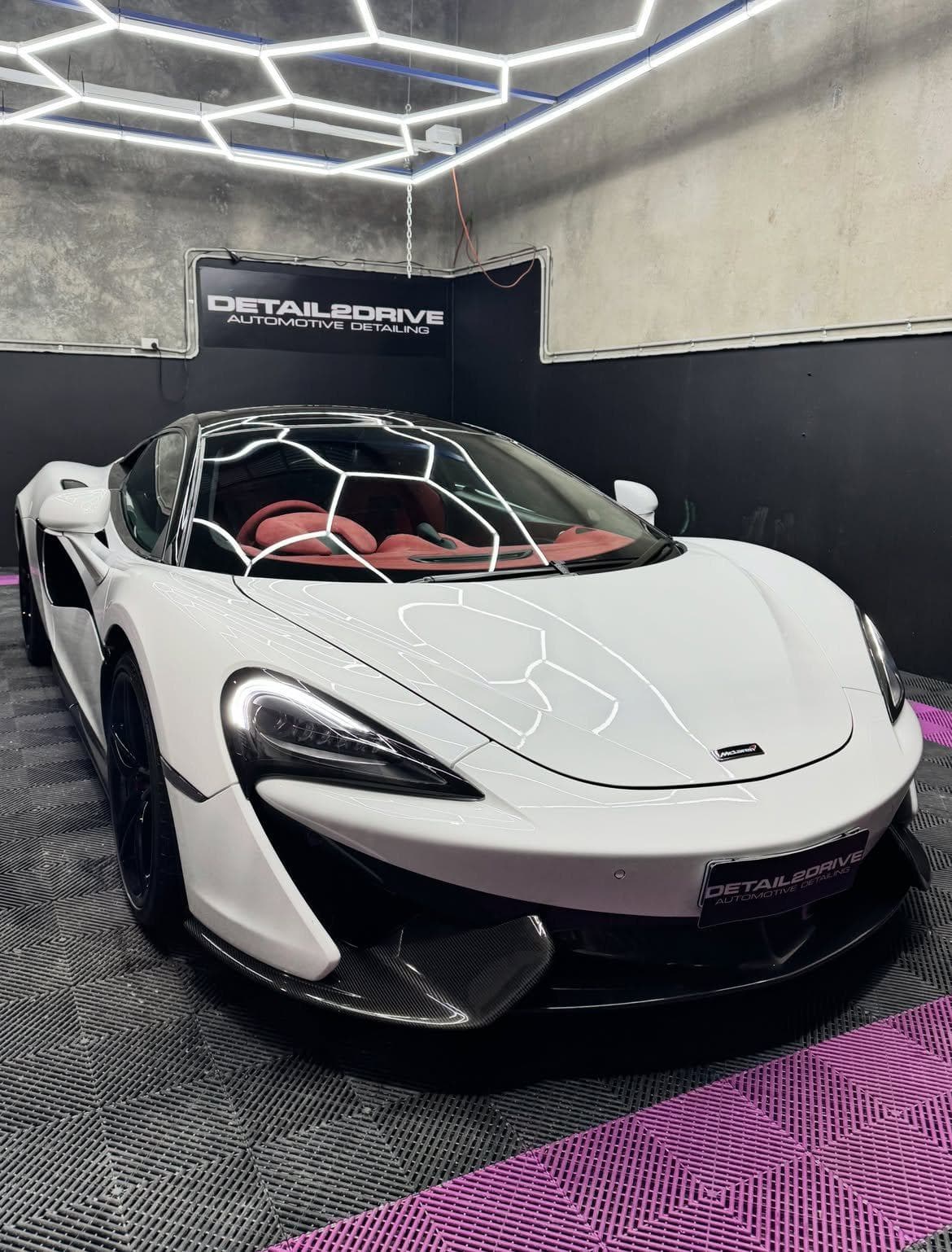
White McLaren 570S after paint correction and ceramic coating in Pakenham
03

Ceramic Coating Application

One day

Coating is the easy part. Everything before it is the job. A day on preparation, application and the conditions that decide whether a coating lasts eight years or eight months.

  • Why preparation is ninety per cent of a coating result
  • Panel wipe, residue, and what stops a coating bonding
  • Temperature, humidity and dust, and why a driveway fights you
  • Application technique, levelling, and reading flash time
  • Catching high spots before they cure instead of polishing them out after
  • Cure control, and what to tell a customer about the first week
  • Writing aftercare that protects you as much as the car

Suited to Detailers who can already correct paint. Coating swirled paint locks the defects in, so correction comes first.

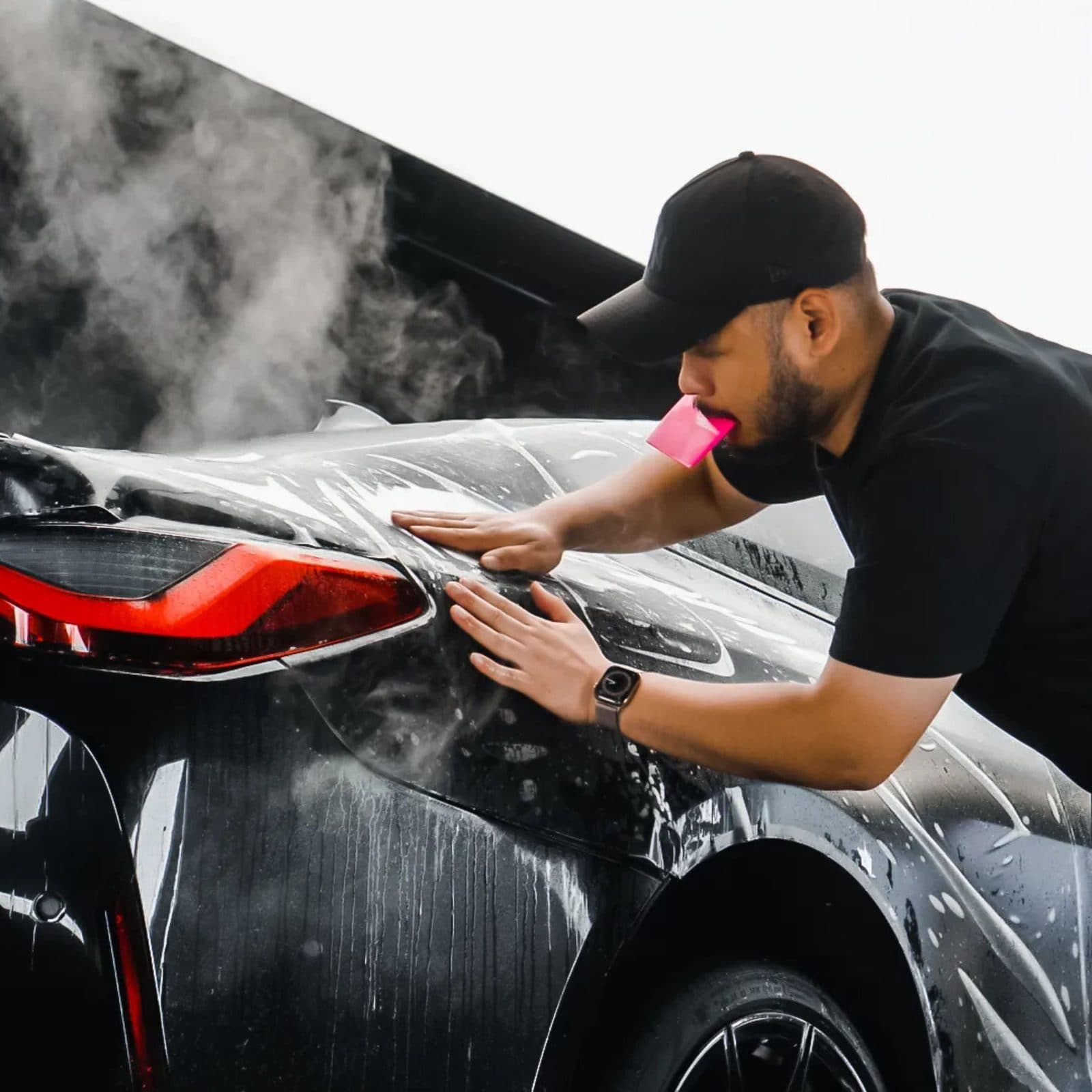
Clear paint protection film being squeegeed onto the rear quarter of a black sports car
04

Paint Protection Film

Two days

The hardest install in detailing and the least forgiving of a bad surface. Film is fitted wet, shaped onto curves, and every mistake stays visible under a clear layer for years.

  • Surface preparation, and why film is unforgiving of anything left behind
  • Pattern cutting and fitting film to the panel in front of you
  • Slip and tack solutions, and what each one is actually doing
  • Squeegee technique, stretching, and working film onto a curve
  • Wrapped edges and tuck lines, and when a panel will not allow one
  • Dealing with fingers, creases and lift before they set
  • Cure, inspection and handover

Suited to Detailers with correction experience who want to add the highest value service in the trade.

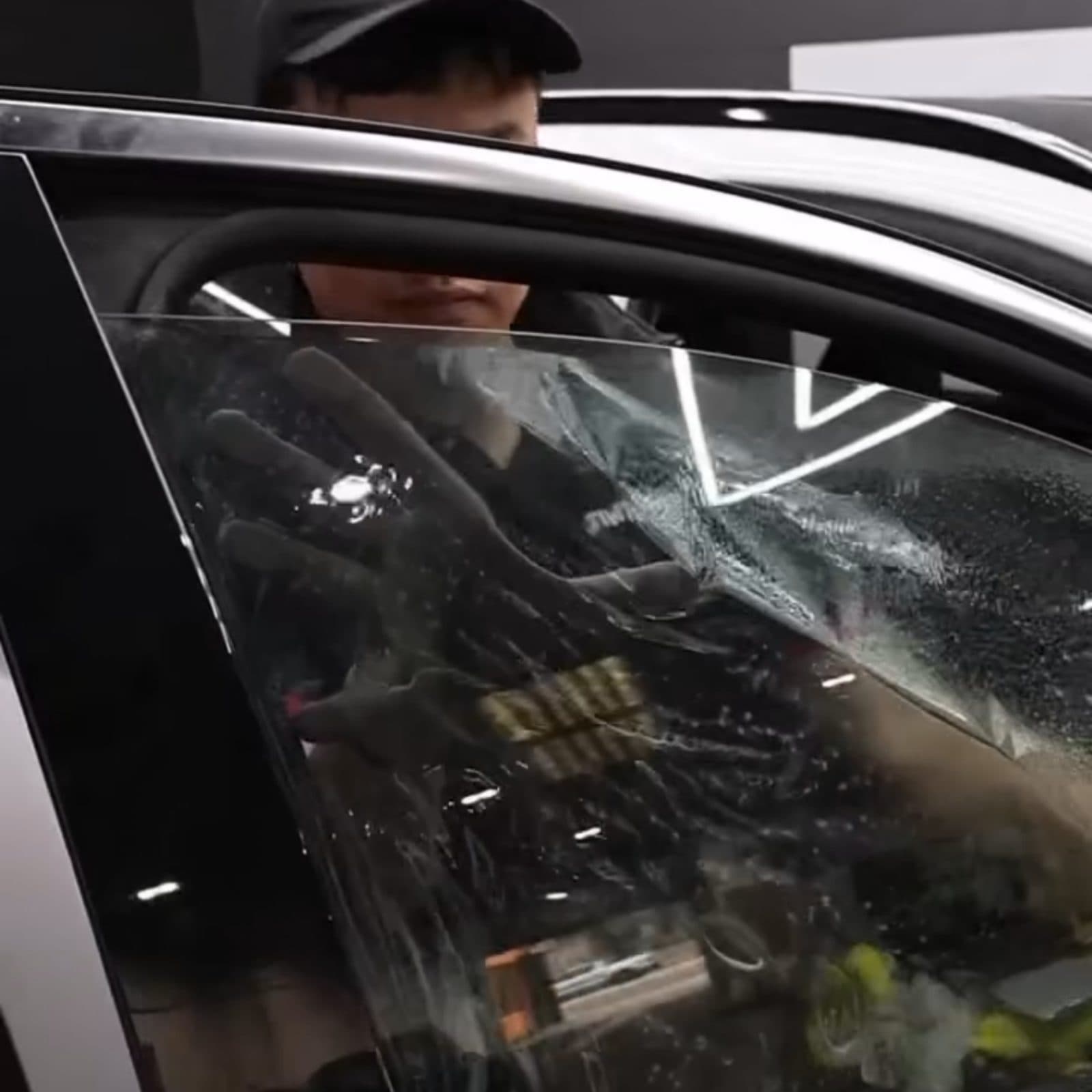
Window tint film being squeegeed onto car glass during a studio installation
05

Window Tinting

One day

A clean tint install is mostly glass preparation and heat shaping. Both are learnable in a day, and both are where every speck and crease comes from.

  • Glass preparation, and what gets sealed under the film when you rush it
  • Stripping old film and adhesive without wrecking the demister lines
  • Cutting film to the glass on the car in front of you
  • Heat shaping curved glass so the edges do not lift later
  • Fitting in a controlled space, and what dust actually does to a job
  • Victorian legal shade levels, and quoting a job that will pass inspection

Suited to Detailers adding tinting as a service, or anyone fitting film who keeps getting contamination.

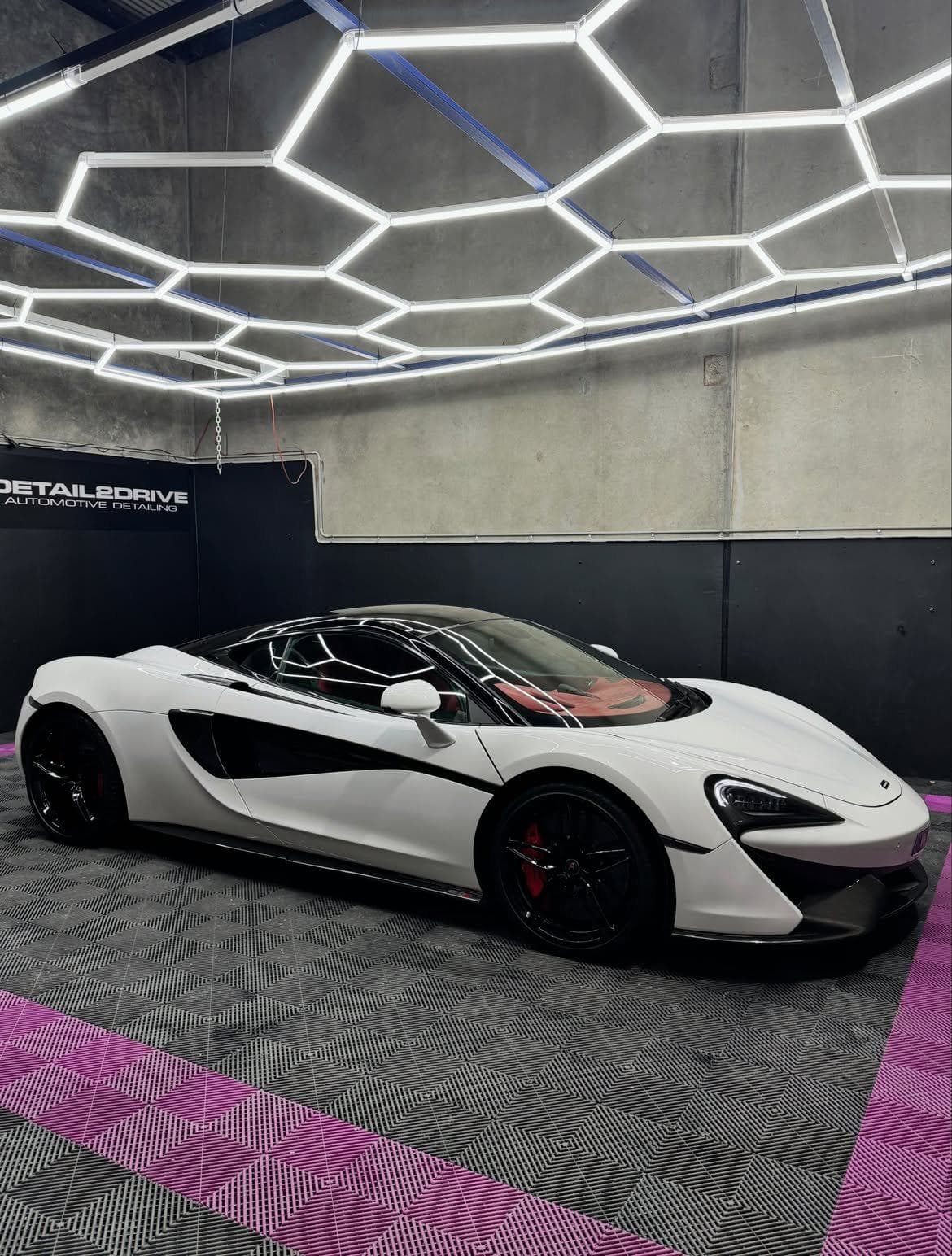
White McLaren 570S detailed and parked side on in the Pakenham studio
06

Pricing And Running The Work

Half day

The part nobody teaches, and the reason good detailers go broke. How to quote properly, where the time actually goes, and how to say no to the jobs that cost you money.

  • Quoting on the car in front of you instead of off a price list
  • Where the hours really go, measured rather than guessed
  • Pricing correction when every car is a different amount of work
  • Setting expectations before the job so handover is not a negotiation
  • Which jobs to turn down, and how to turn them down well
  • Photographing work so it actually brings the next customer in

Suited to Detailers already doing the work who are busy and still not making money. Usually booked onto the end of another day.

Honest Filter

Who This Is For, And Who It Is Not

Turning down a booking that was never going to work is cheaper for both of us than running the day and leaving you disappointed.

Worth Your Day

  • Detailers who are self taught and know they have gaps
  • People starting a detailing business who want to start correctly
  • Working detailers adding coating, film or tinting to what they offer
  • Anyone who has done a short course elsewhere and still does not feel confident

Probably Not

  • Anyone looking for a certificate rather than a skill
  • People wanting a guaranteed income, because nobody can promise you that
  • Car owners wanting to detail their own car, which is a different conversation

The Point Of It

What You Actually Leave With

No certificate, because there is no licensing body for detailing in Australia and a piece of paper from any trainer is worth exactly nothing to a customer. What you leave with is the ability to do the work.

Enquire About Training
  • 01A process you can repeat on the next car without guessing
  • 02Honest feedback on what your hands are actually doing wrong
  • 03A product and pad setup that suits the work you do, not a sponsor list
  • 04The ability to look at a car and quote it properly
  • 05Jesse's number, for the job that goes sideways six months from now

Training Questions

Before You Book A Day

What detailers ask before they commit a day and their own money to this.

01

Do I need my own tools to train?

No. Everything you need is in the studio, and you will use it on the day. If you already own a machine and want to learn on the one you will go home with, bring it, because pad and machine combinations behave differently and there is no point learning on gear you do not have.

02

Do I need experience before booking?

Not for Detailing Fundamentals. Correction, coating and film all assume you can already wash a car safely without putting marks into it, because each one builds on the stage before it. If you are not sure where you sit, say so when you enquire and Jesse will tell you honestly which day to start with.

03

How much does training cost?

It is quoted per person, because the days are shaped around what you already know and how many modules you want to run together. Send through what you can currently do and what you are trying to add, and you will get a straight number back.

04

Do I get a certificate?

You get the skill, not a certificate. There is no licensing body for detailing in Australia, so a certificate from any trainer is a piece of paper rather than a qualification. What gets you work is the finish on the car you hand back.

05

Can I bring my own car to work on?

Usually yes, and for correction it is often the best option, because you leave with a corrected car as well as the skill. Mention it when you enquire so the day can be planned around it.

06

Will you train someone who works nearby?

Yes. Jesse trains detailers who operate in the same area, including people who will end up competing for the same work. The trade is better when the standard is higher, and a customer who has had a bad experience with a cheap detailer is harder for everyone to win back.

07

Can we run more than one module together?

That is the most common way it is booked. Correction and coating over two days is the usual pairing, because they run into each other anyway. Film is normally booked on its own, because two days is the realistic minimum to get competent at it.

Trade Enquiries

Tell Jesse Where You Are Stuck

Send through what you can already do and what you are trying to add. You will get a straight answer about which module to start with, and a price, rather than a brochure.